to help themselves,
to release and realise more of their potential
Dennis Martin Consultants
Contact us and see how we can work together and create a path to the future that you, your people and your business deserve.
The One That Got Away: an OD Project Failure
NEW PAGE
As is often the case when dealing with complex adaptive systems, what emerges in the short run and what emerges in the longer run can be quite different as this true story will vividly illustrate.
A manufacturing business, based in the Port of Liverpool, was faced with having to reduce its manufacturing costs by 42% to remain competitive or to close with the loss of 60 jobs.
The Way Forward for this company would require substantial and radical change. The odds against success were heavy given the negative history of industrial relations in the company and the absence of trust and mutual respect between the unions and management.
We would need a new culture, ‘tinkering’ with the above would be self-defeating.
It would be essential that the employees (and a reduced hierarchy of managers) created and owned the new culture together.
We started with an existing culture scan process involving every employee in face-to-face listening sessions about what currently was and what was needed as the new culture if the business and employees were to survive.
We collated all the answers and shared them with every employee. This was feedback of their perceptions, ‘agendas’, creativity etc. We asked employees to make a decision: shall we go forward with an inclusive (of you) or exclusive (of you, done by management) process?
The employees chose an inclusive approach.
So that’s what we did, we valued and respected their decision.
For example we formed a working group of five shop stewards and five managers to tackle the need to reduce manufacturing costs by 42% and consult with every employee re their cost reduction ideas at every stage.
I remember vividly being with them when they had achieved about 70% of the cost reductions needed and had explored every cost category but one: head count.
I asked what would happen to the figures if we had say 20% fewer people here?
The emotion in the room was high. It could have gone either way.
But to their immense credit the mixed group of employees and managers tackled an issue most managements would have found daunting….making fellow workers redundant to save the plant for their colleagues.
They eventually achieved a 30% reduction in headcount having discussed it and communicated about it with every employee.
Amazing!.
I was full of admiration for them.
The inclusive process as above was developing 2 key values that had been missing from the business for years: trust and ownership, both of which were essential for the new culture.
There were few if any signs of the old culture such as ‘command and control’ attitudes by managers; bullying and intimidation or ‘them & us’ divides by anyone.
The inclusive change process was “for real” (i.e. not a pilot or an experiment and there was no Plan B) and it avoided merely creating a smaller, cheaper version of the culture that had contributed to the plant’s “change or die” situation.
In just under one year with no disruption to supply, no disputes or industrial action, and with the same employees the hierarchical structure of the plant was changed to self managing teams; hourly pay and overtime was replaced with all employees becoming salaried and silos and demarcation were eliminated.
This new way of thinking and performing by all members of the workforce produced the kind of working environment, appetite for change and results which, 12 months ago, would have been considered impossible on this site.
Unlike most “change or die” situations of this type, both the changes required and the implementation strategy were not devised by a team of senior managers behind closed doors and then imposed upon the plant.
In this case the site workforce itself identified necessary changes and the strategy required to save the business. This was a fully inclusive process.
It is of great credit to everyone involved that they overcame the negative conditioning of the old culture and focussed instead on their survival common purpose future.
They created a new culture and achieved a remarkable turnaround.
So, what happened next?
……. Disappointment
The amazing change in the company’s culture never achieved its full potential after the first year of astonishingly good, quick start, remarkable achievements described above.
Why not?
As The WL-Pfizer Ireland Tablet Plant Cultural Initiative 'taught' us:
The cultural initiative requires absolute commitment from the site leadership staff, and visible, felt sponsorship from Senior Leaders.
If this commitment is not forthcoming, then the initiative will not be successful.
This will require constant reiteration of the cultural purpose, values, behaviours and characteristics, as when under pressure individuals and organizations will tend to revert to what they know best (e.g. command and control management; centralized decision making; consistency, certainty and conformity; task dominated short-termism).
I had failed to communicate the above wisdom strongly enough.
Instead, there was a slow but accelerating dilution of the culture due to 5 main influential changes overlapping simultaneously (in no order of priority):
1. the metrics changed including major raw
material cost reductions....
...which ‘removed’ the urgent common purpose need for and focus on a new and different culture (i.e. the survival - closure threat disappeared).
The powerful, non-negotiable ‘reduce manufacturing costs by 42% to remain competitive or close the business’ faded over the next 2 years as the business became significantly more profitable.
The employees’ remarkable achievements in the first year of reducing costs by 30%+ and a similar reduction in headcount had made an important contribution to survival. Unexpectedly, it had also facilitated a reversion to the previous 24/7 short-term focus on manufacturing productivity.
The new culture was too new to have demonstrated that it would consistently result in higher performance more easily than the previous culture which was, of course, part of the ‘comfort zone’ employees had experienced for 15-20 years earlier and had ‘sacrificed’ in pursuit of change, a new culture and job security.
2. both Senior
Management and some
previous shop stewards...
....‘regressed’ back into their ‘comfort zones’ with feelings of ‘glad that’s over, we can get back to ‘normal’ now’.
For example, some of the strong informal leaders who had been shop stewards, responsibility for decision making had not been fully accepted by them as part of their role: ‘That’s management’s job. I don’t want to be an informal LEADER, I want to be what I was for the 15 years earlier – a strong worker with respect and status for facing up to our ‘enemy’, management’.
We had never reached the emotional beliefs area of powerful conditioning involved in those experiences. The implied change for a few that you are no longer a ‘worker’ now but an informal leader (tolerable as it was whilst the threat of closure was there and felt real), when the metrics changed and the threat receded and new managers who were not bought in to the new culture didn’t encourage it with enthusiasm, they reverted back to their previous identity and comfort zones which could be summarised as ‘them & us’.
3. the company had a policy of ‘rotating’ managers into
new sites every two years or so.
New managers were coming to the site who had no knowledge or
experience of ‘the good old days’ of IR combat and of the recent
past (2 years) of significant culture change.
This changed the new
culture dynamics that weren’t deeply embedded enough in all
employees to enable them to ‘overcome’ the lower levels of
commitment and enthusiasm for it by new managers. A process of
dilution and erosion of the new culture emerged.
4. time – after nearly 2 years, the above 3
differences began to weaken motivation for, and
performance of, the new culture....
...and I didn’t take the time needed to address this fully, even with
the excellent help of the facilitators.
Also we needed more
time to stabilise the new culture and develop supportive positive
habits to sustain it. Our hard work and enthusiasm for change had
been fully consuming us and I hadn’t paused to look up at the
‘bigger picture’ enough. I knew the relationship: change without
sustainability = disappointment but had missed the significance of
the arrival of the unexpected changes above.
I was caught out by CAS
and my lack of using whole brain thinking in the stimulating process
of releasing and realising employees’ untapped potential.
5. not enough support / guidance from me re the ‘mysteries’
of living with complex adaptive systems CAS.
I should have invested more time and learning with the facilitators and the few strong powerful influential informal leaders who never fully bought in to the new culture.
Colleagues who were not prepared to influence / ‘educate’ them or become their informal leaders (because of the image, identity, personality and status their previous ‘stand up to management’ interactions had generated) would also have benefitted with more positive guidance from me.
The irony of the WL-Pfizer Ireland statement:
‘This will require constant reiteration of the cultural purpose, values, behaviours and characteristics, as when under pressure individuals and organizations will tend to revert to what they know best (e.g. command and control management; centralized decision making; consistency, certainty and conformity; task dominated short-termism)’
……..was that it wasn’t ‘increased pressure’ that caused the reversion to old comfort zones, it was the ‘relaxation’ of the closure threat and perceived need for the new culture therefore that did it.
As our best facilitator put it, ‘we were so close to a truly amazing success against all the odds. It felt as if the success we deserved had been dragged away from us’.
It was a disappointing and tough outcome that emerged from the massive complex CAS involved in the revolutionary and inspiring change of culture we had undertaken.
But it taught us such a lot as hard experiences often do.
The business is still in business and some shadows and elements of the new culture are occasionally evident. As are some fond memories and wistful sighs of what might have been. Some individuals will describe personal growth from the process that has been to their personal benefit.
Was it worth it even though
ultimately it ‘failed’?
There are probably as many answers to that question as there were people who participated.
My answer would be a strong ‘yes’ because we helped the employees to help themselves to take ownership for their own future, they learned to trust others and themselves more, they didn’t become ‘victims’, they faced and made very difficult decisions and lived with the consequences, they exceeded their own and others expectations and much of what they did would have been considered as ‘IMPOSSIBLE’ in that business given its history.
The employees took a giant leap into the unknown and I was honoured to have helped them to help themselves do that.
What I have described above is a true story.
Sometimes it feels like ‘the one that got away’, there was so much latent talent and untapped potential waiting to be released and realised with massive benefits for the business and its employees.
And then I reflect on the view that there is a ‘time’ for everything. Maybe the time wasn’t quite ‘right’ but we were very close.
And then I reflect on, ‘Why didn’t I see the erosion process coming from outside sources?’. CAS (complex adaptive systems) having delighted me….disappointed me, big time.
I never saw it coming because it came in the unexpected shape of ‘success’, at a deceptive speed of change and in the guise of being true.
Does this sound at all familiar to you?
If you are 'mulling' about culture change, mentoring and / or OD (Organisation Development) I will be happy to share some of my 30+ years experience with you in a free, no obligation, no selling conversation to discuss your situation and ideas and options.
I have 30+ years experience in the 3 areas above.
Call me on my direct landline: +441484607369 (I am in the UK) or email me: mds.dennis@btinternet.com or
complete the Contact Help Form below. I will get back to you quickly.
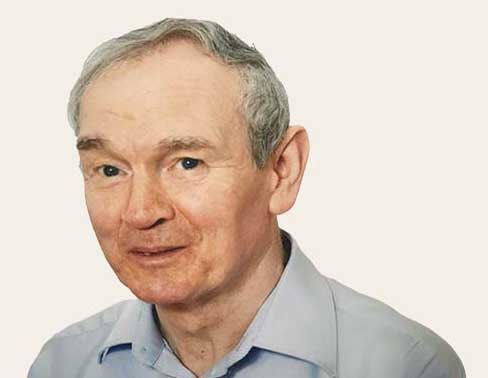
I am Dennis Martin, born and bred in Yorkshire in the U.K., and in the last 30 years I have worked with clients in the U.K., Ireland, Netherlands, Germany, France, and with projects in U.S.A., Israel and Turkey.
I am proud of the fact that with many of our clients we have worked with them for a long time...
One employee commented: “I am sure in my mind that the training and new skills that we learned from Dennis made the transition in changing the organization to the way we work in multi-tasked, self-managed teams possible in a relatively short time.”
Taken from The Lubrizol Story independent report
Thank you Dennis for your help, positivity, support and mentoring during the very successful turnaround of our Lubrizol business. Our situation was dire and after a 40% downsizing so was morale.
Tony Strong, CEO,
Adare SEC,
Leicester, England
Another said: “For the first time ever, the entire workforce was assembled in one room and given the opportunity to understand the business, where it was heading and how each person could make a valued contribution to its ongoing success.”
Taken from The Lubrizol Story independent report